
If you are reading this, you are probably one of the thousands of Canadians who look in the mirror and notice changes you would like to make, perhaps the lingering effects of pregnancy.
Your nose, which has always bothered you, stands out. Perhaps you want to refresh your face. However, when you look to book a procedure, the local Canadian market is often discouraging.
In major Canadian cities such as Montreal, Toronto, or Vancouver, the cost of plastic surgery has soared, with procedures like a « Mommy Makeover » reaching or even exceeding the price of a new car. Combined with wait times to book a procedure that can extend for months or even years, the local option for cosmetic surgery is becoming increasingly inaccessible.
Because of all these factors, medical tourism has shifted from a niche trend to a mainstream financial decision. However, once you have decided to travel abroad for your transformation, another question logically arises: “Where should I fly for my procedure ?”
If you spend any time online, especially on social media, Istanbul appears everywhere. The city has been marketed aggressively with flashy reels and celebrity endorsements. Yet, for discerning patients, especially Francophones and those who prioritize medical rigor over marketing hype, Tunisia remains the undisputed choice.
Why More Canadians Are Considering Plastic Surgery Abroad
As we said in our introduction, high expenses, long wait times, and limited access are driving more Canadians to book their cosmetic surgery outside the country. In Canada, provincial health plans rarely cover cosmetic operations, thus patients must pay the entire cost out of pocket. According to qualitative research on Canadian cosmetic surgery tourists, cost was the most important incentive, with almost 80% citing it as a main reason to go abroad. Plastic surgery expenses in many popular destinations can be 50-70% lower than in Canada, especially when clinics take advantage of lower operating costs and a favorable exchange rate.
In addition, patients across Canada have grown accustomed to lengthy wait times for non-urgent surgeries, with median wait times frequently measured in months rather than weeks. According to reports on elective and priority treatments, Canadians can wait longer than 20-25 weeks on average, and more than 50 weeks in some specializations, for surgery. Despite the fact that cosmetic surgery is typically performed outside of the public system, the prospect of scheduling a procedure abroad in a matter of weeks is extremely appealing.
Finally, recent research on Canadian Cosmetic Surgery travellers discovered that cost was not the primary motivator; post-operative care and overall customer experience were also important factors in their decision to travel abroad. Many patients are searching for more than simply a cheaper procedure; they want an integrated experience that includes surgery, transfers, lodging, and follow-up. Not only that, but some of you reading this value privacy when traveling abroad: you prefer to recover away from colleagues and family while visible swelling and bruising fade. Surgeons observe that a portion of patients intentionally prefer a « spa-like » or vacation-style setting where they may focus on recuperation and return home feeling rejuvenated, without having to explain every step of the procedure.
Once that mental shift happens, the question is no longer if you should travel, but where ? And for many Canadians, the real comparison quickly becomes Tunisia vs Turkey.
The Economics of Beauty : Comparing Plastic Surgery Prices in Canada, Turkey, and Tunisia
Let’s address the primary motivator here, money and the financial aspect. It is important to dissect together why surgery abroad can be less expensive. The key message here is you are not paying for a “low-quality procedure” or “discount medical care.” You are simply taking advantage of the consequences of our globalized world.
In Canada, a surgeon’s fee includes costly malpractice insurance, significant clinic overheads, staff salaries aligned with the Canadian cost of living, and taxes. On the other hand, if you travel to Tunisia, you benefit from a favorable exchange rate and a lower cost of living. And the cherry on the cake is you don’t compromise the quality of the medical care. A breast implant from Mentor or Motiva costs roughly the same worldwide; the savings you make come from service and facility fees.
However, the pricing models in Turkey and Tunisia are significantly different. In Turkey, the market often operates on an « à la carte » basis. They hook you with a low headline price for a rhinoplasty; however, you later discover additional costs for post-operative medication, compression garments, VIP transfers, and hotel stays. Which means that you need to properly plan for every single thing, on top of your procedure, if you want to get a good grasp of your budget.
In contrast, we, at Medcare Vacances, promote the « All-Inclusive Medical Stay. » It is our belief that a patient recovering from surgery should not have to reach for their credit card to pay for a taxi or a meal. We offer comprehensive packages. When we send you a quote for a breast implant procedure or a facelift, it includes the surgical fees, anesthesia, hospitalization, and, crucially, a recovery stay with our partnering hotels with a team fully dedicated to you. This transparency is vital for us and our patients who need to budget their trip precisely. Which is why we thought that a little table to estimate your costs would be handy (see below).
Cost Analysis to book procedures in Canada, Turkey and Tunisia (2025 Estimates in CAD)
2. Des prix 50 à 70 % moins chers qu’au Canada
Le coût des soins médicaux en Tunisie est nettement inférieur à celui pratiqué au Canada. Que vous recherchiez une rhinoplastie, une liposuccion, une abdominoplastie, un lifting ou des implants dentaires, les tarifs en chirurgie esthétique restent particulièrement attractifs.
Si les tarifs sont plus bas qu’au Canada, ce n’est pas au détriment de la qualité. Le coût de la vie moins élevé, des frais de structure plus raisonnables et une organisation pensée pour accueillir des patients étrangers permettent de proposer des soins à des prix nettement plus accessibles.
Par exemple, le prix d’une rhinoplastie en Tunisie s’élève en moyenne à 1500 euros, contre 4000 à 5000 euros au Canada, pour une qualité de soins équivalente. De même, le prix d’une liposuccion en Tunisie ou le prix d’implants dentaires restent jusqu’à 70 % inférieurs aux tarifs nord-américains. L’abdominoplastie et le lifting affichent également des tarifs très compétitifs.
| Procedure | Avg. Price Canada (Surgery Only) | Avg. Price Turkey (Variable inclusions) | Medcare Tunisia (All-Inclusive Package) |
|---|---|---|---|
| Rhinoplasty | 10,000 CAD / 15,000 CAD | 3,500 CAD / 5,500 CAD | From 3,650 CAD |
| Breast Augmentation | 11,000 CAD / 14,000 CAD | 4,200 CAD / 6,000 CAD | From 3,900 CAD |
| Tummy Tuck | 8,500 CAD / 15,000+ CAD | 5,300 CAD / 7,500 CAD | From 3,950 CAD |
| Hair Transplant | 10,000+ CAD | 2,500 CAD / 4,000 CAD | From 3,300 CAD |
If you want to read more information, please refer to our previous article.
Medical Approach: Mass-Market Clinics in Turkey vs Personalised Care in Tunisia
While pricing gets you in the door, medical knowledge guarantees you walk out securely. This is when the differences between Turkey and Tunisia become most obvious.
Turkey has unambiguously asserted itself as a global leader in medical tourism. The number of patients traveling into Istanbul is astonishing. According to the Turkish government, approximately 2 million patients were treated in 2024, producing $10 billion in revenue. While the country has amazing professors and cutting-edge hospitals, its popularity has resulted in a « mass market » strategy. In the industry, we frequently speak to « hair mills » or « nose factories, » which are primarily concerned with volume. Some aggressively marketed Turkish clinics may only have a « star surgeon » present for the consultation, with technicians or helpers performing the majority of the procedure. This situation, called « ghost surgery, » is an unacceptable risk for Medcare Vacances.
In contrast, Tunisia takes a more traditional, European approach to medicine. Tunisian surgery, which has long been associated with the French medical system, emphasizes the sacred link between doctor and patient. The plastic surgeons we partner with, veterans like Dr. Mabrouki, Dr. Ben Jemaai are not just operators. They are medical consultants who will follow you from the initial diagnosis to the final check-up.
The majority of our partner surgeons have finished a substantial amount of their internships or training elsewhere. The Conseil National de l’Ordre des Médecins (CNOM), which sets ethical standards similar to those in Europe, strictly oversees their operations. You are a patient with a name and a particular medical history in Tunisia, not just a ticket number on an assembly line.
Language and Culture: Why French-Speaking Care in Tunisia Matters for Canadian Patients
The language barrier is frequently the decisive factor for our patients from Quebec and New Brunswick, and with good reason. Surgery is a risky endeavor. Awakening after anesthesia can be unsettling. In those circumstances, being able to express your grief, needs, or anxiety in your native French is not only a source of comfort; it is also a safety element.
The medical community in Tunisia speaks French as their common language. It is spoken fluently by your surgeon, anesthesiologist, ward nurses, and even hotel employees. There is no need for a translator to help you understand your symptoms. Because Tunisian medical experts are used to international interactions, this bilingual setting guarantees good English fluency for our English speaking patients from Ontario or the West.
Turkey, while multinational, poses a greater linguistic obstacle. Outside of the primary doctor, support workers frequently lack fluency in English or French, which can lead to feelings of isolation or misunderstanding during the important recovery period.
Patient Support: How Medcare Vacances Supports You Before and After Surgery Abroad
One common misconception regarding medical tourism is that you are « on your own » once the plane lands. This may be true for solo travelers, but it is the polar opposite of the Medcare Vacations experience. We understand the North American service standard and will apply it to your stay with our 7 years serving our patients.
Our responsibility goes far beyond scheduling your operation. We serve as both your champion and your safety net. A Medcare assistant will be available to you from the time you arrive at Tunis-Carthage airport until you depart. Furthermore, we address the most common concern of medical travelers: post-operative follow-up.
Unlike clinics that abandon you after you return to Canada, we advocate continuity of care. If you have any worries about healing or scars after returning to Montreal, our dedicated team is always available to answer your questions and provide guidance. We remain your point of contact, ensuring that your recuperation is easy and that you are satisfied.

Pre-Operative Preparation: A Clinical Approach to Your Surgery Abroad
A good operation begins long before you enter the operating room. Medcare Vacances approaches the preparatory phase as a medical process rather than a sales process.
It begins with a thorough remote diagnosis. We do not provide general quotations. You will be required to give clear medical photographs as well as a full medical history. The surgeon individually reviews your case to decide whether you are a viable candidate. Above all, we respect honesty; if an operation is dangerous for you or your expectations are unattainable, our surgeons will let you know. Our reputation is built on this level of integrity.
We also have strict pre-operative protocols. The most crucial of these is our No Smoking Policy. We require patients to stop using nicotine products, including vaping and patches, at least four weeks before their surgery. Nicotine is a vasoconstrictor, meaning it shrinks blood vessels and drastically reduces blood flow to the skin. This can result in necrosis (tissue death) and poor scarring after surgeries such as a tummy tuck or breast lifts. This rule is unbreakable since we are unwavering about your results.
Finally, we will handle the details of your « Medical Vacation. » Peace is required for the recovery process. Rather than resting in a sterile city flat, our patients recuperate in luxurious beach hotels. The pure Mediterranean air, the sound of the sea, and being far from your daily 9 to 5 rythm, all contribute to an ideal atmosphere for the body to recuperate.
Travel Logistics: Flying from Canada to Tunisia for Plastic Surgery
When the medical diagnosis is confirmed and you receive the « green light » from our surgeons, the abstract concept of surgery becomes very real. Now you have to get here. Many of our Canadian patients find the logistics overwhelming, but the route is actually more straightforward than you may think.
For those traveling out of Montreal, the trip is surprisingly simple. We commonly refer to the Montreal-Tunis route as the « Golden Link » for our patients. Tunisair offers a direct flight that lasts roughly eight and a half hours. There is a great psychological comfort in boarding a plane at Trudeau Airport and waking up at your destination, rather than rushing through Frankfurt or Paris terminals to make a connection. Eliminating layovers on your return flight is not just convenient; it is also a key comfort element.
If you are coming from Toronto, Vancouver, or elsewhere in Canada, you will need to make a connection, usually through a large European hub like Frankfurt or Paris. Our tip is simple but important: always choose flexible tickets. Biology is not an exact science, and while unusual, a minor error in your pre-operative blood work upon arrival could cause your operation to be delayed by a day or two. Having a ticket that moves with your needs provides you with financial security.
What to Pack for Surgery in Tunisia: Comfort Over Fashion
It takes a different mindset to pack for a medical trip. You’re not packing for a fashion show; instead, you’re packing for mobility and comfort. The truth of surgery, particularly bodily surgeries like bariatric surgery or a BBL, is that your range of motion will be restricted for a few days.
Forget zippers that fasten in the back and tight t-shirts that need you to elevate your arms above your head. Your luggage should be packed with button-up pajamas and loose, comfortable loungewear. You want to wear fabrics that breathe and waistbands that do not pinch. Slip-on sneakers can come in handy when kneeling down to tie laces feels like an Olympic event.
Consider your mental healing, in addition to your wardrobe. You will experience plenty of downtime. While our partner hotels have fantastic Wi-Fi, we always recommend downloading your favorite comfort shows or books to your iPad before leaving Canada. Recovery is a waiting game, and having your favorite entertainment available might help the hours pass quickly.
Not “Cheap” Surgery: Affordable Luxury and Real Value in Tunisia
The phrase « cheap » is frequently used in medical tourism, but we believe it conveys the wrong picture. The term « cheap » suggests a quality tradeoff. What you are experiencing in Tunisia is more of a value optimization. Because the Canadian dollar is strong versus the Tunisian dinar, your spending power permits you to enjoy a level of luxury that would be prohibitively expensive back home.
This is why Medcare Vacances specifically avoids clinical, city-center hotels for your recuperation. We believe that the environment influences recovery. Stress elevates cortisol levels, which hinders recuperation. To compensate, we will place you in luxurious hotels in the coastal suburbs of Gammarth or La Marsa.
Consider resting in a room overlooking the Mediterranean Sea, where the air is fresh and the surroundings are green and peaceful. You can take advantage of room service, laundry, and a concierge to alleviate the stress of daily duties. You are not simply healing; you are also resting. This « resort » environment has a palpable impact on how you feel physically. It transforms a medical requirement into a restorative respite.
Can You Visit Tunisia During Your Medical Stay? What Is Reasonable
We frequently receive the question, « Can I actually visit Tunisia? » Yes, but it requires careful scheduling. We divide your journey into two distinct phases: active pre-op and passive post-op.
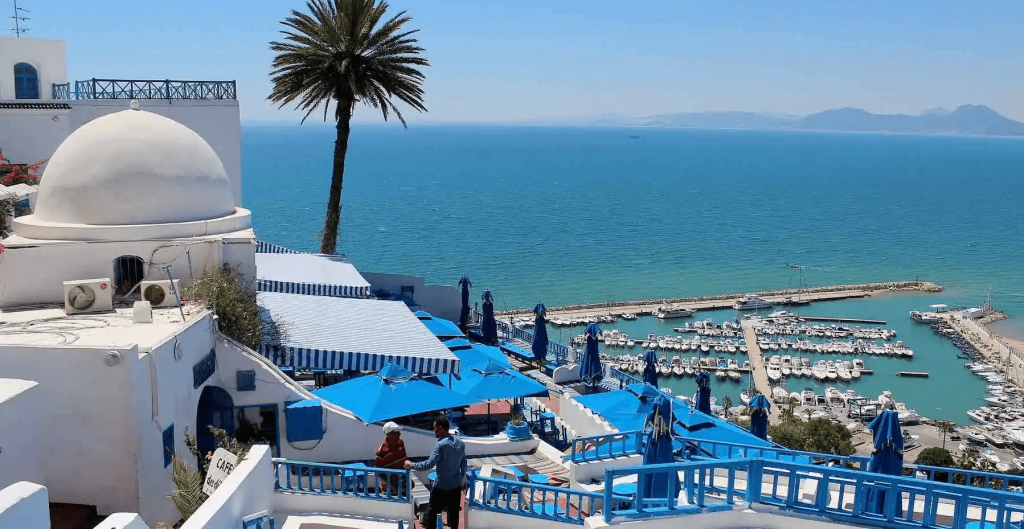
If you can visit a day or two before your scheduled surgery, you’ll have plenty of time to explore. Our clinics are conveniently located near some of the Mediterranean’s most spectacular heritage sites. Wander around Sidi Bou Said’s blue and white streets, which have been compared to Greek islands but have a distinct North African appeal. Enjoying a traditional pine nut tea at the Café des Délices while gazing out over the Gulf of Tunis is the ideal way to relax before your surgery.
For history buffs, the historic ruins of Carthage provide an insight into the Roman Empire without requiring extensive climbing. Even the Medina of Tunis, with its labyrinth of spices, leather, and ceramics, is accessible—but only before surgery, or if you do a light procedure. The hustling, the strolling, and the people are thrilling sensory experiences, but they are strictly prohibited once you are in treatment.
Post-Operative Recovery in Tunisia: How to Rest Safely After Surgery
Once the procedure is completed, the « tourism » changes drastically. You are no longer a tourist; you are a recovering patient. This does not imply you have to be in a dark room, but your activities must be moderate.
You can relax on the hotel terraces, breathe in the sea air, and go for calm, short walks in the gardens to improve circulation, which is essential for preventing blood clots. However, we have two cardinal guidelines that we follow to ensure your success. First and foremost, no swimming. Water, whether in the sea or in a pool, is a breeding ground for bacteria, so keep your incisions dry. The second rule is no sunbathing. UV rays harm fresh scars, causing them to darken permanently.
Respecting this slower pace allows your body to direct all of its energy into healing. You return to Canada not only with a new look, but also with a deep sense of relaxation, having enjoyed the beauty of Tunisia from the luxury of a deck chair in the shade.
Tunisia or Turkey: How to Choose the Best Country for Your Plastic Surgery
Overall, there is no « one-size-fits-all » solution.Some patients will continue to prefer Turkey, while others may opt for Tunisia.What matters is selecting a destination that meets your priorities, which could include:
- Price transparency and all-inclusive planning.
- Language and cultural comfort.
- A European-style medical philosophy that emphasizes personal attention over volume.
Tunisia offers a unique combination for many Canadian patients, notably those from Quebec and Francophone populations. High-level surgeons trained in a European tradition, French-speaking medical teams, and English comfort. All-inclusive medical stays, which simplify logistics and costs A serene Mediterranean setting that promotes both physical and emotional recuperation.
Next Steps: Getting a Personalised Medical Opinion for Your Surgery Abroad
If you are actively evaluating Tunisia and Turkey for your Canadian operation, the next logical step is to transition from generic information to a personalized medical opinion.
That is where we come in. We assess each situation professionally, not commercially, and provide individualized quotes based on your needs rather than a generic package. We assist you in determining what is feasible, safe, and suitable for your body.
You do not have to make this decision alone, and you certainly do not have to manage the practicalities, medical questions, and emotional burden by yourself.
FAQ: Common Questions from Canadian Patients about Surgery in Tunisia vs. Turkey
1. Is it safe to travel to Tunisia or Turkey from Canada for plastic surgery?
Every surgical operation, whether in Canada or overseas, carries some level of risk. Canadian public health officials caution travelers that dangers may be higher outside the country if hospitals are poorly regulated, infection control is inadequate, or communication is unclear.
The key is not the name on the map, but the clinic, surgeon, and procedure you select. Reputable agencies in Tunisia exclusively collaborate with board-certified surgeons, modern private clinics, and well-defined pre- and post-operative protocols.
Your case is examined remotely before any date is confirmed with Medcare Vacances, your surgery is performed in authorized private facilities, and you receive structured follow-up rather than a « one-shot » vacation. This does not remove risk, but it does lower the preventable ones and puts the experience closer to what you would expect from a reputable Canadian or European clinic.
2. Tunisia vs. Turkey: Which is the better destination for plastic surgery?
There is no universal winner. Both Tunisia and Turkey have excellent surgeons and modern private clinics. The real difference lies in how the market is organised and what you, as a patient, value most.
Turkey has emerged as one of the world’s leading hubs for cosmetic surgery and hair transplants, seeing a considerable number of overseas patients each year. That scale drives favorable rates, but it has also resulted in extraordinarily high-volume centers known as « factory-style » clinics, where much of the labor is delegated to enormous technical teams.
Tunisia, on the other hand, operates on a smaller scale and takes a more European, relationship-oriented strategy. French is frequently spoken in medical settings; many teams also speak English, and agencies such as ouselves prioritize all-inclusive, transparent packages and personalized care over sheer volume.
Turkey will stay appealing if your top priorities are low prices and aggressive promotion. Tunisia is typically a better fit for Canadian patients, particularly those from Québec and other Francophone communities, who are concerned with language comfort, straightforward pricing, surgeon engagement, and a quieter recovery environment.
3. How much does plastic surgery in Tunisia cost compared with Canada and Turkey?
Exact prices depend on the procedure, the surgeon and the clinic, but the pattern is consistent:
- Compared with Canada, surgery in Tunisia can be up to 40–60% cheaper for many cosmetic procedures when you factor in surgery, clinic fees and accommodation.
- Compared with Turkey, Tunisian prices are usually in the same ballpark for surgery itself, but often more transparent on what is actually included in the package (hotel, transfers, post-op visits, etc.).
For Canadians, the biggest driver is that you are paying out of pocket either way. When all-inclusive Tunisian packages are sometimes lower than the cost of surgery only in Canada, the difference becomes less about “luxury” and more about simple financial logic.
4. Why is cosmetic surgery cheaper in Tunisia than in Canada?
The lower price is not because the surgery is inherently “cheap” or the implants are of poor quality. Reputable Tunisian clinics use the same major implants and medical devices that you would see in Europe or North America.
The difference comes from three main factors:
- Lower cost of living and salaries: staff and facility costs are significantly lower than in Canadian cities.
- Lower clinic overheads.
- Favourable exchange rate: the Canadian dollar goes much further against the Tunisian dinar, so your purchasing power is higher.
When you add an agency model that negotiates volumes with clinics and hotels to build all-inclusive packages, you end up with total stay prices that undercut Canadian private-sector fees by a wide margin, without changing the core surgical materials
5. How long should I plan to stay in Tunisia for my surgery trip from Canada?
Most patients should plan for 3-4 days, and often a little more, depending on the procedure.
- For surgeries such as rhinoplasty or breast augmentation, a typical stay includes:
- Arrival and pre-operative consultation,
- Surgery and 1–2 nights in clinic,
- Several days of hotel recovery with at least one post-op check before flying home.
- For more extensive body procedures (tummy tuck, mommy makeover, body lift), agencies and clinics often recommend 10–14 days to allow swelling to stabilize and early wound healing to begin before you face a long-haul flight back to Canada.
On top of surgical considerations, you also need to factor in jet lag and travel fatigue, especially if you are travelling from Western Canada with a connection in Europe. Planning a slightly longer stay than the bare minimum gives you more margin if your pre-operative tests need to be repeated or your surgeon prefers to keep you one extra day under observation.
6. What is included in an all-inclusive cosmetic surgery package in Tunisia?
While each agency structures its offers differently, most serious all-inclusive packages for cosmetic surgery in Tunisia cover:
- The surgical procedure itself (surgeon and anaesthetist fees).
- Clinic costs: operating room, hospital stay, nursing care, standard medications immediately after surgery.
- Accommodation in a 4 or 5 star hotel during your recovery, often with breakfast or half-board.
- Transfers: airport to hotel to the clinic and back, sometimes with a dedicated driver or coordinator.
- On-site support: a local representative or patient coordinator available to assist with appointments, translation and practical issues.
- Basic medical follow-up during your stay (post-operative consultations and dressing changes).
What is usually not included:
- Flights from Canada.
- Travel insurance and medical evacuation insurance (strongly recommended for any surgery abroad).
- Personal expenses (meals outside the hotel plan, excursions, shopping).
- Additional tests or extra nights if your medical situation requires an extension beyond the planned package.
Medcare Vacances fits into this all-inclusive model: you receive a clear quote that details the procedure, clinic, hotel stay, transfers and support, so you know exactly what your budget looks like before you book.
7. Can I finance my cosmetic surgery in Tunisia from Canada?
Yes, in many cases you can. Because cosmetic surgery is usually not covered by public health insurance, Canadians often turn to third-party financing companies to spread the cost of elective procedures over time.
Specialised lenders such as Medicard, a Canadian patient-financing company, explicitly offer financing for cosmetic and plastic surgery and partner with several medical tourism agencies that send patients to Tunisia.
In practice, the process typically looks like this:
- You receive a quote for your surgery and stay in Tunisia from the agency.
- You apply directly to a financing provider in Canada, who assesses your application and, if approved, pays the clinic or agency while you repay the loan in monthly installments.
Medcare Vacances does not act as a bank and does not decide on approvals, but we can help you by providing detailed quotes and documentation that patient-financing companies typically require. That way, you can decide whether to pay in full, use a line of credit, or apply for a dedicated medical financing solution from Canada.